What is sarvangasana (pan-body pose)?
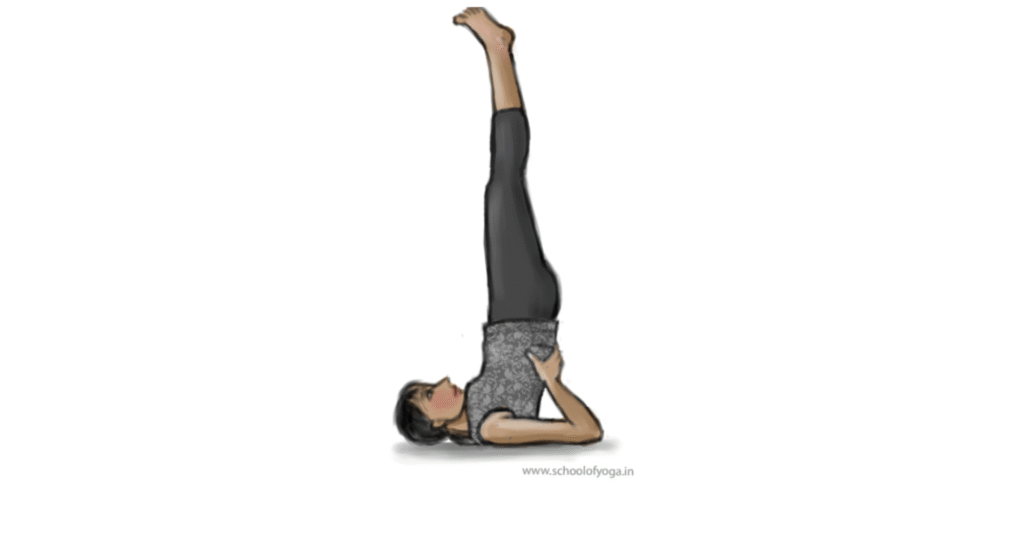
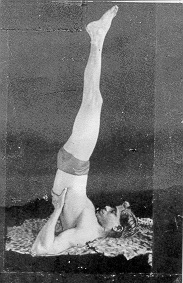
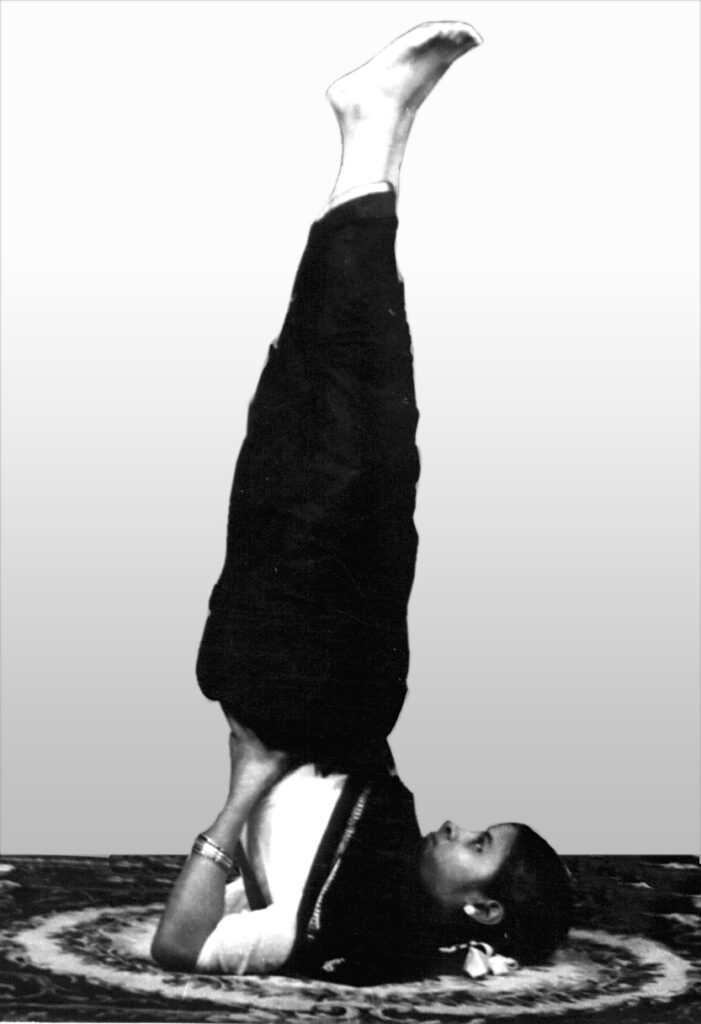
In sarvangasana, also called the shoulder stand or pan-body pose, the practitioner balances the entire body on the shoulders, holding the head in a neck-lock with the chest. This is an advanced asana and must be learned under the supervision of a qualified expert.
How to do sarvangasana yoga pose? (to be learned under supervision only)
- Sthithi (starting) position: On a soft mat, lie flat on your back.
- Fold your thighs over your torso, such that both your knees touch the forehead.
- Keeping your elbows firmly planted on the ground, support your back with hands under hip.
- Straighten your legs vertically upwards. Keep both legs straight.
- Use your hands to push your chest against the chin, to form a lock. For increased leverage and support, this may require that hands be brought further down on the back.
- As the back of the neck relaxes, it will settle on the ground.
- Keep your legs and torso straight.
- Breathe calmly and try to be serene. Focus on the blood flow to the neck region.
- Start by holding this position for 3 minutes and gradually increase the duration up to 15 minutes.
- One can also split the asana into two periods of 3 to 10 minutes each with a break of about 2 minutes.
- The drishti (gaze) recommended is padayoragre (toe of the foot gaze).
What are the benefits of sarvangasana ?
- This asana bathes the thyroid and para-thyroid, endocrine or ductless glands situated at the base of the neck on both sides of the windpipe with fresh oxygen-rich blood. This is important because, thyroid controls the speed of chemical reactions in the body, influencing aspects such as the rate of growth and development of sexual characteristics in adolescents. Also, a defective thyroid could lead to goitre and cretinism in children. Parathyroid also controls the use of calcium and phosphorus in the body. Therefore, sarvangasana is very useful for rejuvenating all these related areas.
- Owing to the inverted pose, blood supply aided by gravity rushes down. The neck lock ensures that the blood circulates around the organs in the region, primarily the thyroid, parathyroid, and larynx.
- The inverted pose also increases blood supply to the brain stem, which regulates functions such as heart rate, breathing, sleep, eating and the functioning of cranial nerves. Therefore, this asana can support all treatments relating to the brain stem.
- Sarvangasana is excellent for people with upper respiratory tract and lung ailments such as asthma or emphysema, and also people with nasal allergies, as it increases resistance to allergies and improves blood supply to the lungs and heart.
- The inverted pose pushes the intestines against the diaphragm and sets up peristalsis. As a result, this helps to cure constipation.
- This asana helps balance all metabolic activity and increases our resistance to disease.
- The parathyroid is critical in controlling calcium. Hence, sarvangasana is important for regulating the health of the parathyroid and kidneys, which regulate the electrolyte balance.
What are the possible contraindications of sarvangasana ?
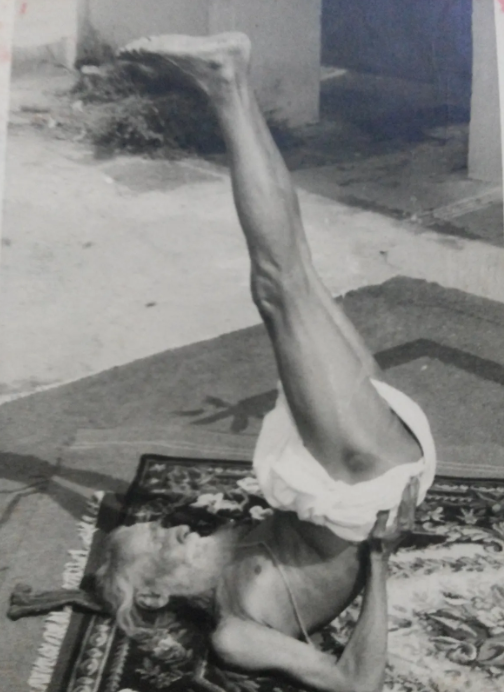
- If you have any form of backache, do not attempt sarvangasana without adequate supervision and support.
- People with cardiac problems, lower back problems, and circulatory disorders should not attempt the final position.
- This asana is not advisable for people having neck ailments such as cervical spondylitis. Those with high blood pressure should start this exercise only after achieving proficiency in other asana and additionally, increase the intensity of practice gradually, under the guidance of a doctor.
- Do not perform this asana if you have cervical spondylosis, hernia, or arthritis.
- People with kidney ailments, hernia, etc., should avoid this asana.
- This asana should not be practiced during the late stages of pregnancy.
Some noteworthy points on sarvangasana or shoulder stand :
Internal Links: Dharma (conditioning), Stress and Situational Awareness, Prana, Asana sequence, Asana schedule, Asana Focus or gazing, Pranayama, Hatha Yoga Pradeepika
External Links: Prana, Chakra, Pancha Tattva, Pancha Prana, Pancha Kosha, Nadi,
- Beginners should learn this asana under supervision. The reason is that the entire body is upended to balance on the shoulder and back of the head. Therefore, any loss in balance could cause grievous damage to the neck and spine, which should be avoided.
- When learning, an experienced practitioner should stand behind the novice, supporting the practitioner’s back and holding the legs. This support can be gradually withdrawn as the practitioner gains strength and confidence.
- Many people worry about a gap between the neck and the ground during a neck lock. However, one should not worry. The natural arch of the cervical portion of the neck is supported by a multitude of minor muscles. Also, these muscles will be stiff initially and will relax with practice. Therefore, over time, the neck will flex to its natural position. Placing arch supports below the neck might hamper this process.
- This asana MUST be followed by matsyasana (fish pose) to reverse the neck lock. Thus, matsyasana is the counter pose of sarvangasana.